Stay Curious
April 10, 2026
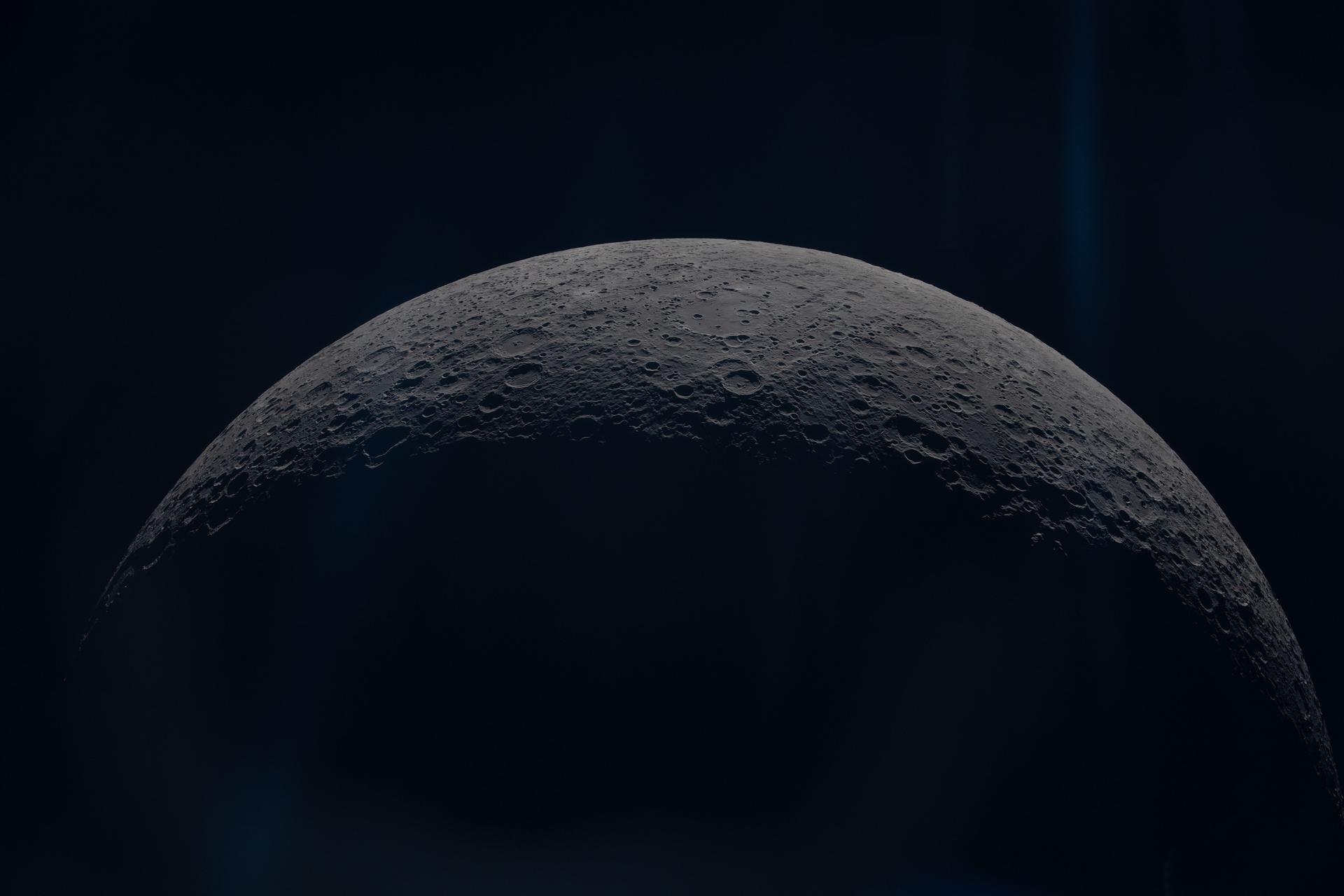
Over the last few days I among countless others have been captivated by the awe-inspiring photos sent back from the Moon by the crew of the Artemis II mission, the first crewed mission to visit our cosmic dance partner since the seventies. A confluence of lucky timing and the keen photographic instincts of the astronauts has delivered us a series of images which I can really only describe as beautiful.
That's a lie. I can also describe them as fucking sick.
Speaking for myself, the photos capture my wonder and curiosity. They take me back to being an awkward and preocious child who got more of their vocabulary from astronomy books than from the playground. But these images also speak to my present. They are very much the kinds of photos I've spent countless hours taking in Elite Dangerous.
That comparison's probably a little gauche. Hear me out.
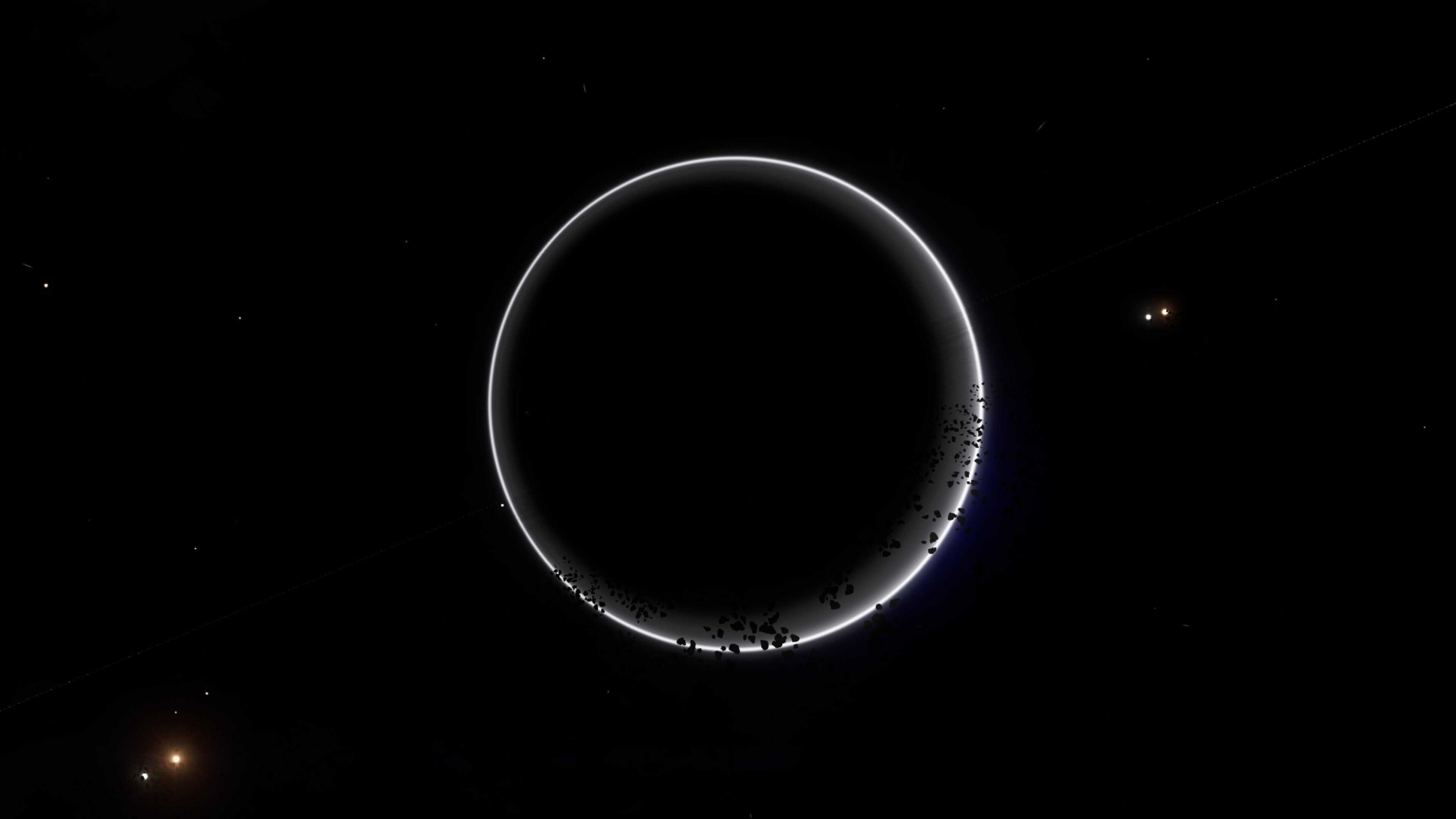
As a lifelong space-lover, Elite Dangerous would seem to check my boxes in very obvious ways, and it does. Here's a ship. Explore a life-sized persistent recreation of the Milky Way. Do some space trading. Blast some pirates. Be a pirate. Map out uncharted worlds. Do all of this in a kind of real time with other players, where FTL travel between planets takes minutes of quiet contemplation and a trip from one end of the galaxy to the other takes days if you're diligent. Sign me up.
But Elite is also my exception in a lot of ways. It is a live service game with a colossal progression grind and no endpoint, yet despite my anemic commitment to MMOs I have logged thousands of hours in the galaxy. I am broadly skeptical of immersion and flow as play values, but will readily admit that Elite comes closer than any other game to offering me a space that I feel I inhabit, not just as an avatar but as my own self with desires and goals. I have long been critical of what I see as a cartoonishly libertarian bent to the game's mythos and worldview--every player is a self-made and self-reliant CMDR, corporations and governments are just regional synonyms for the same thing, and even the mighty galactic superpowers seem to quail in the face of a few well-armed and coordinated Independent Pilots. But even amid this imaginatively dull, anti-utopian sociopolitical tapestry I find value and meaning in a curiosity-driven life.
As a forever game, the only real goals in Elite are those you make for yourself. Story events play out in real-time across the galaxy, but there's no single-player Main Quest to lock in on and bang out in a few dozen hours. You have a baseline motivation to earn credits and build your way up to bigger and better ships, and there's the absolutely fearful grind of engineering after that to further fine-tune your modules, but play long enough and you'll eventually have everything. What you do after that really is what you make of it.
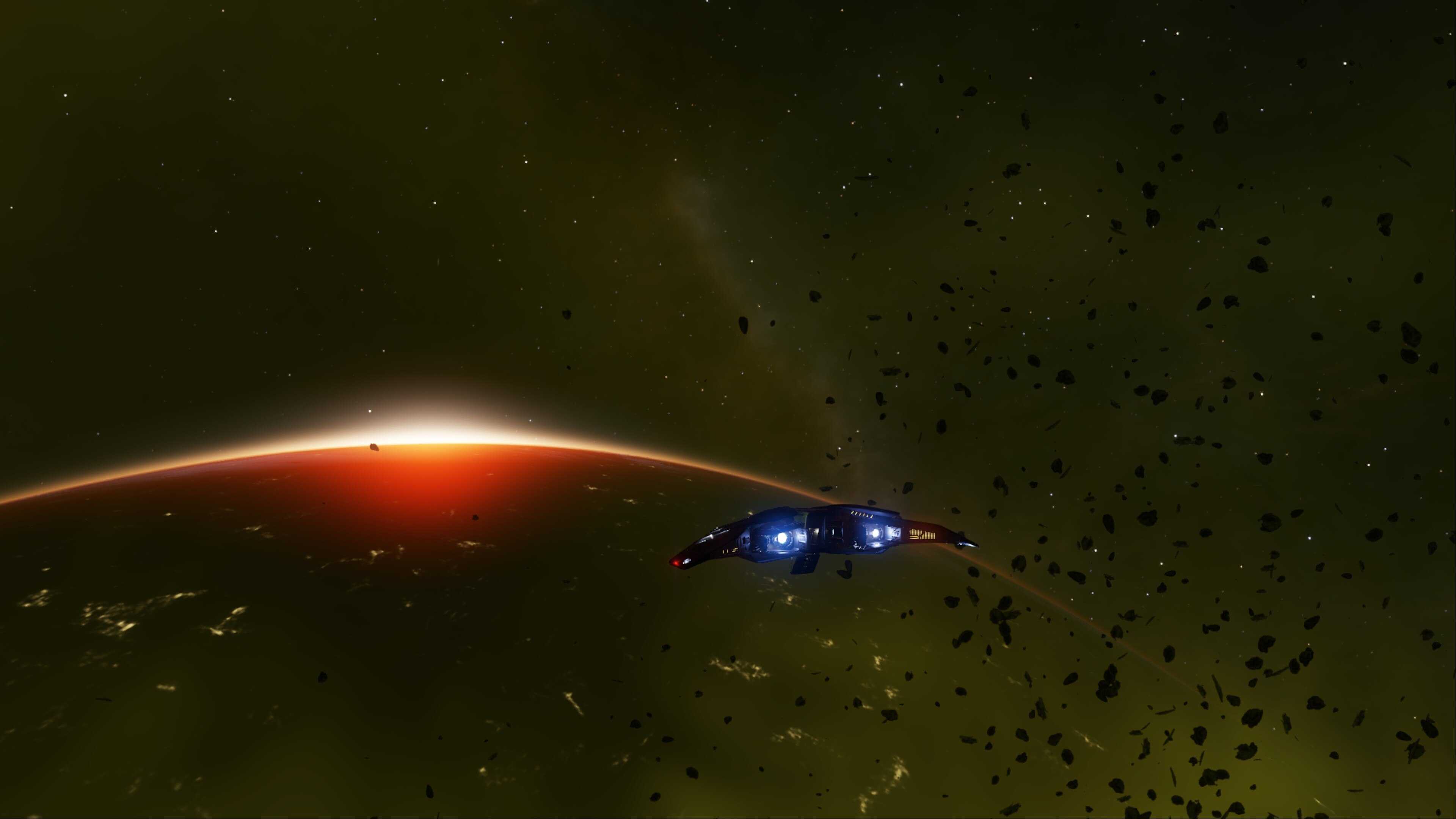
For me, that's photography. I'm not a Photographer in any real way in the material world, and even in other games I have little interest in Photo Mode, but those other games aren't space exploration games i.e. this-is-my-hole-it-was-made-for-me etc. etc.
I said up above that you can cross the galaxy in days if you're diligent. For me it takes weeks, because I stop along the way. There's exploration credits in it, sure, but the real motivation is to take pictures.
Here's something a little like how it goes. I come out of witch-space around an A-Type star. This is a bluish-white star, a few times more massive than Sol, not especially great for habitability with the high temperatures and all but likely to have a hearty and metal-rich system of planets. I ease off on the supercruise enough to take a peek out the window, and the Full Spectrum Scanner picks up a gas giant in an intermediate orbit around the primary. The planet boasts an elaborate ring system. I take the bait, set course for the planet, and drop out of supercruise in an arc of the rings just outside the planet's shadow.
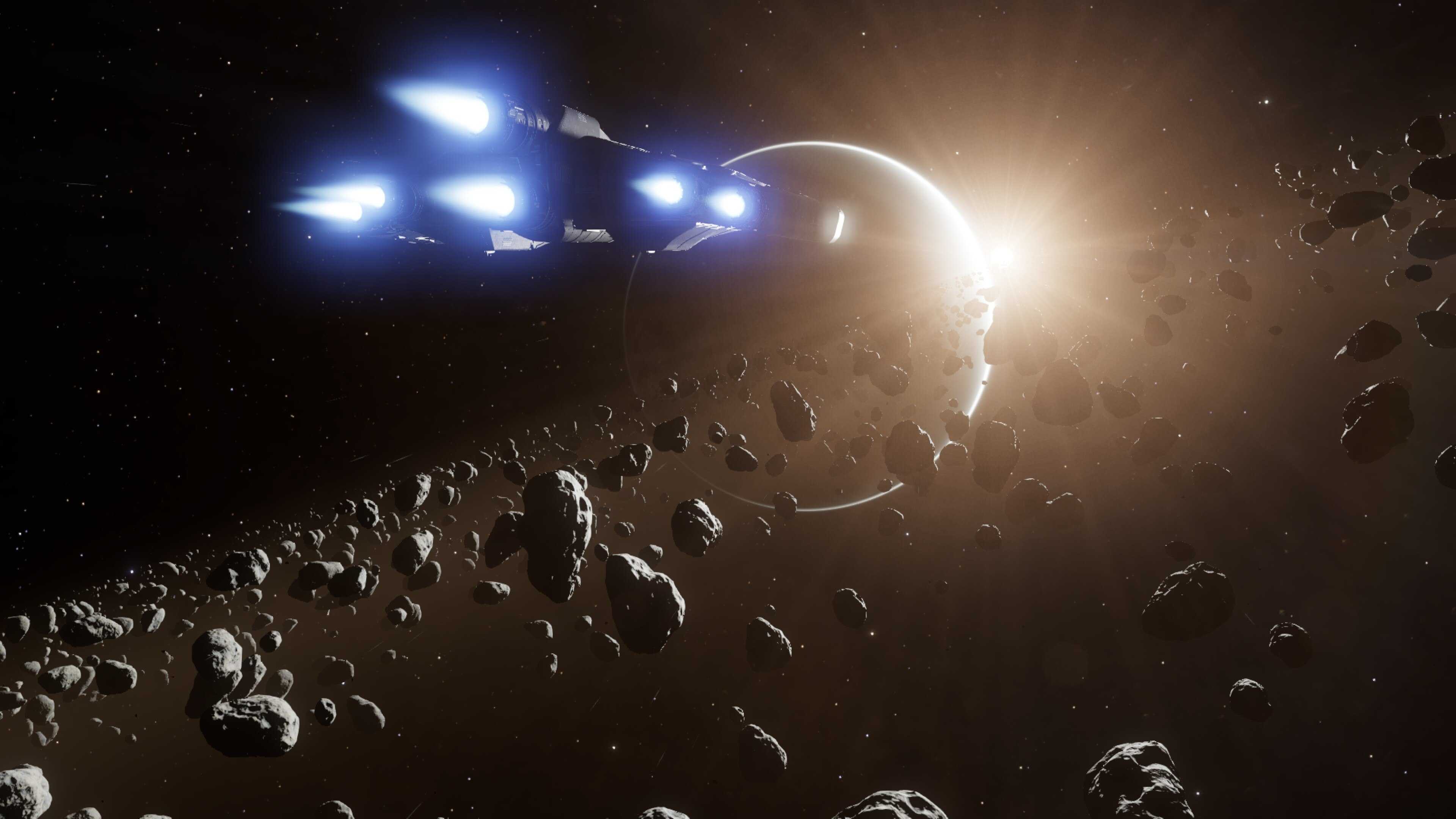
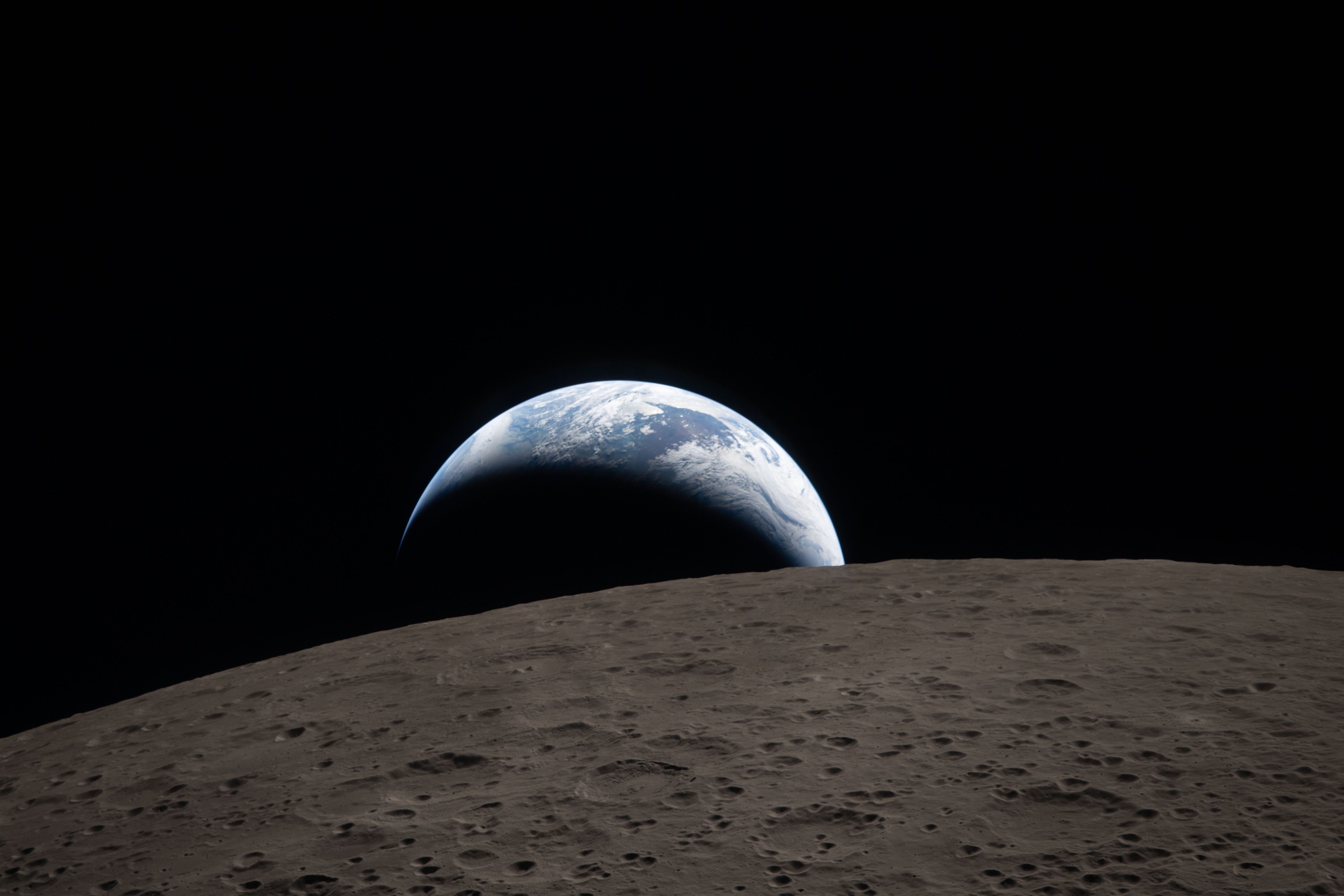
In a 25 minute YouTube video gushing about the Artemis photos, Hank Green notes at one point that the images appear to have a video-gamey look to the contemporary eye. This is because in contrast to photographs taken on Earth, where there are usually multiple light sources and atmospheric diffusion contributes to our visual sense of "near" and "far", the Artemis photos of the Earth and Moon are governed primarily by one light source--the sun--and for the Moon in particular, no diffusion.
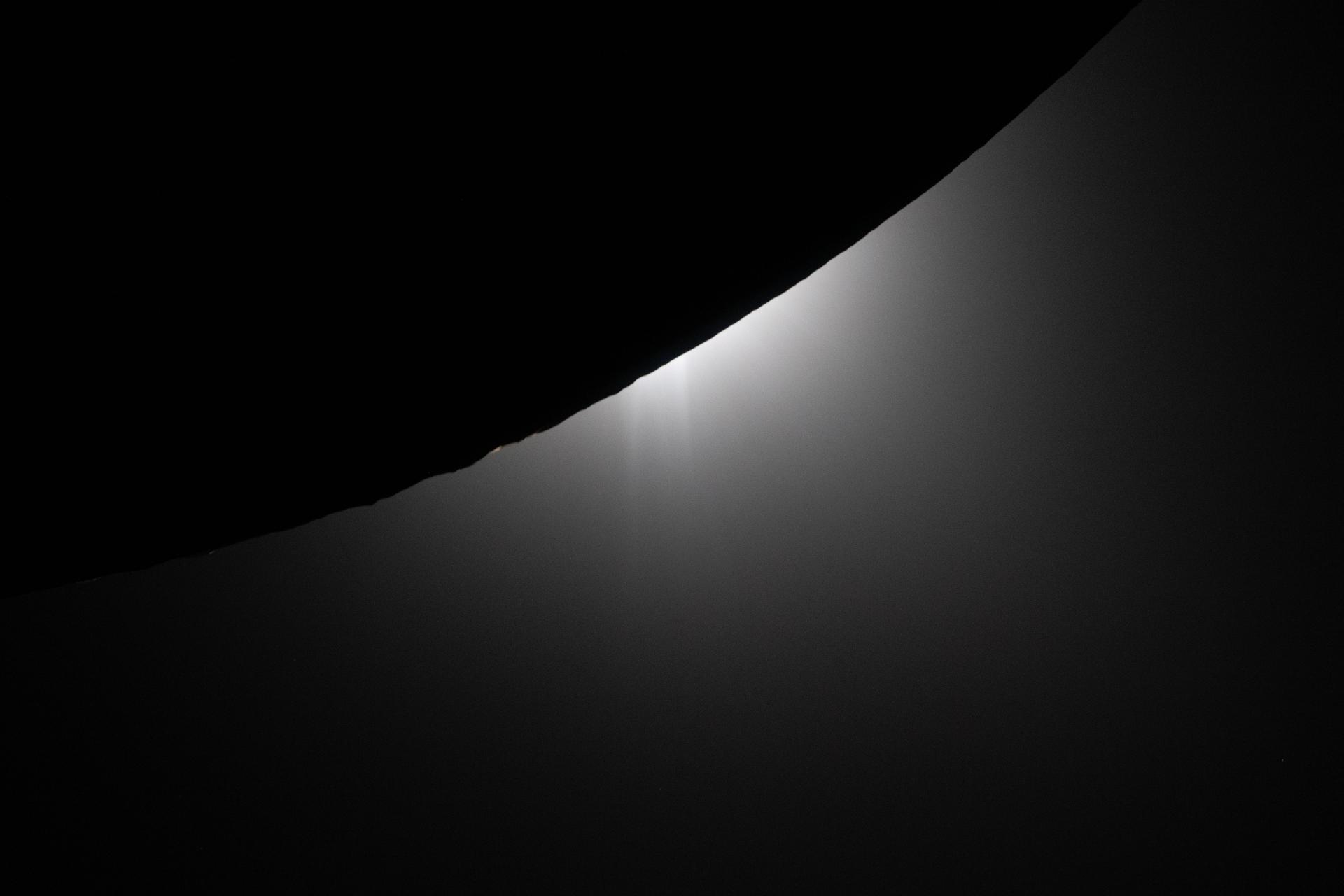
This made me feel a little bit better about having thought immediately of Elite when I first saw the photos, but there's more to it. In my long hours with the game I have been captivated by the same stellar framing that has now captivated the astronauts, and in turn the many people who have marvelled at the photos. The dark face of a world in the starry void. The brilliant limb in counterpoint to the dark. The suggestion of the star, far beyond and just behind.
Perhaps it goes without saying that NASA is not at their best at the moment. Like every US government agency, they are vulnerable to interference and obstruction from the administration of the day, and right now the administration of the day is more interested in optics than science. Just this month, the White House proposed cutting NASA's science mission budget by 47%, while providing a modest 10% bump to Exploration Systems, which includes the Artemis program. It is nakedly obvious that the White House cares nothing for programs that advance our understanding of the cosmos and our place within it, and only favours Artemis for its utility as a photo-op, and perhaps more cynically, as a distraction.
At the same time, I think it's important to take the long view, and the long view is that this has been NASA's reality for a long time, across Democratic and Republican administrations alike. The agency's funding peaked at 4.41% of the US federal budget in 1966 and has steadily dwindled since, dipping permanently below 1% as of 1995 and below 0.5% as of 2016. Without the nationalistic fervor of getting one over on one of the other superpowers to loosen federal pursestrings, NASA has had to fight for table scraps for over half a century. Even so, the agency has worked tirelessly to expand our knowledge of the universe, whether the public is paying attention or not. Politics cannot be disentangled from Artemis, but that also does not diminish the mission's accomplishments or its power to provoke our wonder and curiosity.
In the half-century span between our visits to the Moon, we've stayed curious, through thick and thin, in both our science and our stories. The first exoplanet was discovered in 1992 and now we know about six thousand more. There were roughly a million sci-fi television serials from the late 80s to the early 2000s, and some of them were even quite good. There's some tea going on right now about whether the cosmological constant is even real. Elite Dangerous launched in 2014 and as of 2026 less than a tenth of a percent of its 400 billion stars have been visited by players. We found out that Pluto has a heart.
Elite in many ways represents a bad future for humanity, defined by a focus on appearances over substance. We have faster-than-light travel and biological immortality, but both are status symbols, gatekept as privileges of the wealthy. Large portions of humanity continue to exist under stifling economic inequality, political instability, or even outright slavery. But even in the bad future, people stay curious. Even with a hostile government and a slashed budget, NASA works wonders and inspires our imaginations.
I don't think Elite will be our future. I think we'll do better. We just have to stay curious. We'll have to solve a shitload of other problems too, of course, but curiosity and compassion will be our guides to the stars.
References
Green, H. [hankschannel]. (2026, Apr. 9). Explaining the Most Important Artemis II Photos [Video]. YouTube. https://www.youtube.com/watch?v=oaXRREHVkHo&t=1555s
PBS Space Time. [pbsspacetime]. (2024, Oct. 10). What If The Cosmological Constant Is NOT Constant? [Video]. YouTube. https://www.youtube.com/watch?v=nn94mn8ozOI
The Planetary Society. (2026, Apr. 9). Save NASA Science. The Planetary Society. https://www.planetary.org/save-nasa-science