Living the Dream
July 28, 2026
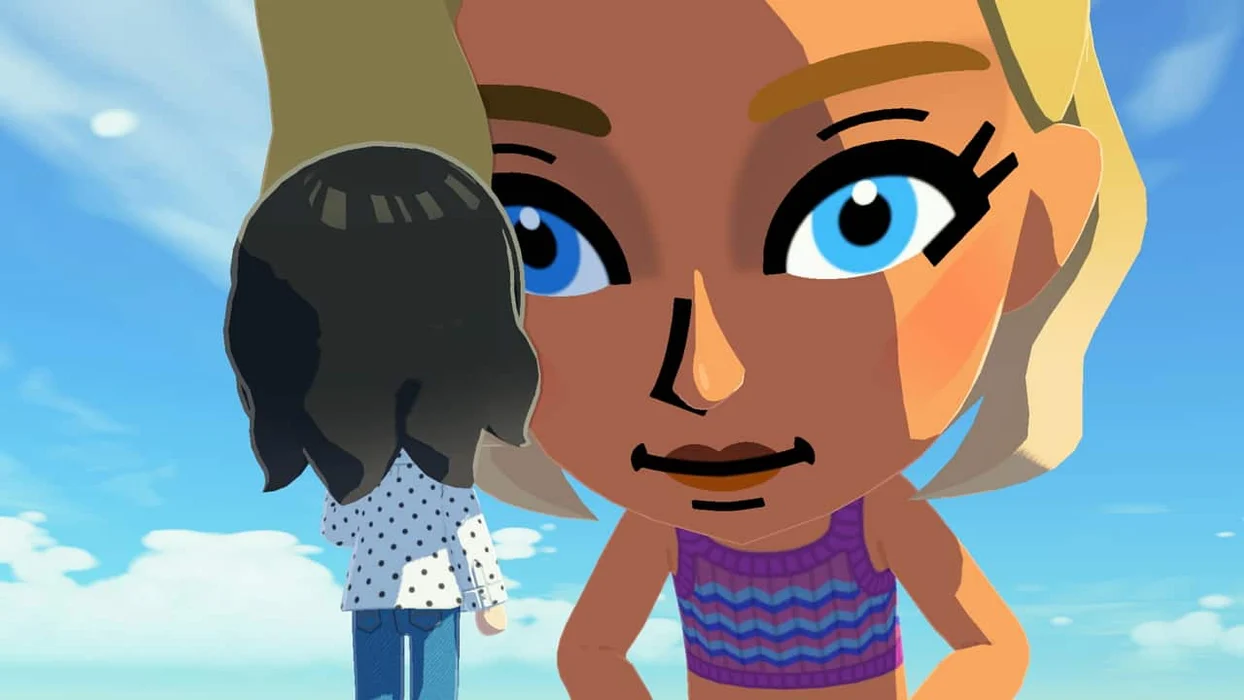
I think what strikes me the most about Tomodachi Life: Living The Dream is, well, its lived-in quality. It feels like a game built out of three generations of hand-me-down parts, and I mean that mostly with love.
The obvious thing is the Miis, right? Nintendo has continued to tweak and iterate upon them, and expand their customization options, but as a basic template they have been around for twenty years now. They've outlived imitations from both Sony and Microsoft. They're easy to make. They're such a malleable format that Nintendo reportedly uses them internally to make NPCs.
The island I put together with my partner is home to us, our birds, Kazuma Kiryu, and a disarmingly amiable little guy I named Mr. Podcast. The speed with which these lavishly produced paper dolls unfurled in my mind as characters actually startled me a little. What impresses me all the more is that this is accomplished largely by way of suggestion rather than explicit detail. A gesture here, a player-supplied catchphrase there, and a growing pool of local conversation topics connect the Miis in my mind to the people that inspired them in the way two chairs, a desk, and a door-on-wheels can be endlessly reconfigured on a stage to transport me to different places that already existed fully-formed in my imagination.
The voices themselves also stand out here--unapologetically uncanny in their robotic artifice. Old tech. Doesn't need to phone home and drink a bucket of groundwater before it gives you an answer. Hilarious results. Other studios are shipping LLM-generated barks as "placeholder assets", catching heat, doing the apology tour. Nintendo shrugs, hands you a speech synthesizer that wouldn't be out of place in the 80s, and tells you to twist the knobs yourself.
It's also a game that's not afraid to cut corners right out in front where you can see them. Most of the foods, items, gifts, and treasures you can give your Miis are static 2D images, up to and including pets. The whole thing has a DIY look-and-feel that isn't far off from WarioWare, and that's appropriate because the game very quickly hands you customization tools to make your own clothes, items, dishes, and ground tiles.
Nintendo EPD apparently kept this one in the oven for nine years, and the play experience matches that pace. Animal Crossing, the most immediate point of comparison, is meant to be played leisurely, but is vulnerable to grindier playstyles, even inspiring indie alternatives that specifically design against that impulse. In Tomodachi there's no real incentive to power through. As far as I know, there's no time-limted or season-exclusive content. The unlocks expand features and customization options for your island, but the main draw is the organic and often chaotic development of relationships between the Miis. It's literally a game all about putting your little guys in situations and watching the ties between them strengthen or fray. Time travelling is kind of anethma to all of that.
Tomodachi is also, and this has not been without criticism, an aggressively offline game. Sharing options are completely clamped down, and there's no inbuilt way to share Miis or other user-generated creations. I do think it's a genuine loss that the Miis I make here can't wander into other games, like they used to on the Wii, but the reasons for this draconian approach are numerous and obvious. They also serve to ensure that the time I spend playing Living the Dream with my partner is genuine quality time, that the jokes are for the two of us and not for posting clout.
There are other ways that Tomodachi Life feels old-fashioned in less-laudable ways. All the press coverage highlighted the increased gender and sexuality inclusivity as something of a turnaround from Nintendo's historical curmudgeonly posture, and yeah, it's nice to be able to make Miis and put them in relationships that better reflect how I see myself and mine. It also renders all the more stark a complete absense of disability on the island. When I tried to give my Kiryu a companion by making Majima, I discovered there were no eyepatch options unless I was willing to sit with the customization tools and draw one myself. In Wii Sports, Miis didn't even have legs, just disincorporated hands floating Rayman-like in front of hovering torsos. Are you telling me after nine years of cooking you couldn't get wheelchairs on an island with almost no topographical variation? Did the reception to that tacky basketball game make y'all gun-shy?
There's also very little leeway in terms of body types. The fattest Mii you can make is just slightly stocky. Uh-huh.
I've been mostly laudatory of my time with the game, but there are some other things I need to be careful about here. Lest this article leave you with an "and this is shorter games with worse graphics" impression, Living The Dream is a Switch 1 game released just a couple short months before Nintendo announced discontinuation of that hardware line in Europe, seemingly because they don't want to go to the trouble of redesigning it to have a user-replaceable battery. I've highlighted the game's smart use of old-fashioned design tools and philosophies, but I'm sure it still wasn't made for a song. Nine years is a long time to pay your staff, and Living The Dream involved contributions from four other studios. Not quite a brunch situation after all. Nintendo is sometimes held apart from what we consider triple-A development, but I think that's because the term is now increasingly associated with corporate mergers, unattainable quarterly growth expectations, and layoffs. It's decreasingly associated with actual new games.
Going by the calendar, Tomodachi Life: Living The Dream is an actual new game, but under the hood it's an old game for an old platform in a way that I think has resonated. As best as I can tell, it has roundly outsold Nintendo's entire Switch 2 catalogue this year with the possible exception of Pokopia. It's neither a forever game nor an everything game. Instead, it requires you to meet it halfway, and fill it up with your imagination and ideas. It is exactly as wide and deep as the amount of time and energy you're willing and able to put into it from your end.